
Bio Latrines in Kenyan Slums

Marlies sends us a bunch of pictures and an interesting story on how bio gas toilets in Kibera slum in Nairobi, Kenya are being used:

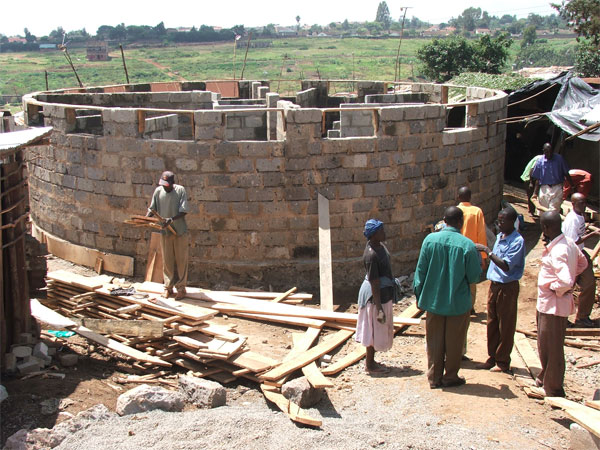
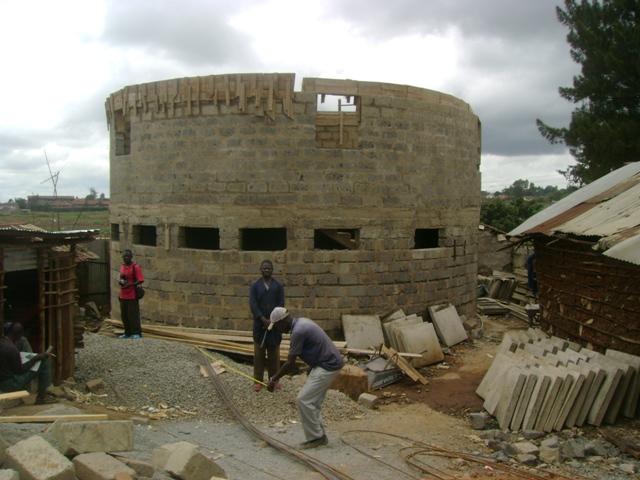
Just the other day on a visit to Kibera Slum I came across this interesting bio gas latrine which is being set up for Kibera people as a response to lacking community toilets. The sanitation situation in Kibera is really really poor! There are a couple of community toilets which where set up after the shooting of the Constant Gardener but only a few years later these are in bad shape! Again, they cost 3/= per visit which is really above of what a typical Kibera inhabitant can afford. Just sum up what it will cost for 5 visits per day for a family of five! So the bio gas latrine is a really good option, since it will generate a little income to make the toilets free of charge.

Here are some pictures:

Kibera bio gas
Kibera Bio Gas Building
Kibera Bio Gas 2

IslamOnline.net has a great writeup on how these work.

[NOTE: If you have any images, stories or reports you'd like others to know about, you can contact us through the AfriGadget contact form. - Thanks Marlies!]

New images! (July 17, 2007). Thanks to Christian Rieck and Marlies:
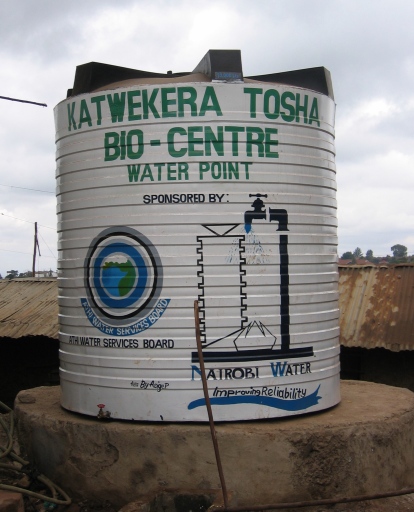

Bio Latrine - Kibera

Bio Latrine Tower

27 comments for this post.

Comment from muti
2 March 2007 - 12:15 am - :

Internet use by black people is growing by reaper 12 hours ago. Votes: 7 Score: 123 (mybroadband.co.za) internet new window 0 comments 2. [IMG like] [IMG dislike] Bio Gas Latrines in Kenyan Slums by hash 9 hours ago. Votes: 5 Score: 111 (www.afrigadget.com) energy kenya new window 0 comments 3. [IMG like] [IMG dislike] Exclusive: Is Spotplex a Better Digg?

Internet use by black people is growing by reaper 12 hours ago. Votes: 7 Score: 123 (mybroadband.co.za) internet new window 0 comments 2. [IMG like] [IMG dislike] Bio Gas Latrines in Kenyan Slums by hash 9 hours ago. Votes: 5 Score: 111 (www.afrigadget.com) energy kenya new window 0 comments 3. [IMG like] [IMG dislike] Exclusive: Is Spotplex a Better Digg?

-->
Comment from Grandiose Parlor
2 March 2007 - 6:06 am - :

AfriGadget: Bio Latrines in Kenyan Slums. See also: My Heart’s in Accra: From Flying Toilets to Free Methane Celebrating Afrodeutsche (African Germans). See: Atlantic Review: Black History Month Jewel in the Jungle: Black History Month in Europe 2007: Amo

AfriGadget: Bio Latrines in Kenyan Slums. See also: My Heart’s in Accra: From Flying Toilets to Free Methane Celebrating Afrodeutsche (African Germans). See: Atlantic Review: Black History Month Jewel in the Jungle: Black History Month in Europe 2007: Amo

-->
Comment from Appropriate Infrastructure Development Group (AIDG)
5 March 2007 - 6:40 pm - :

Bio Latrines in Kenyan Slums

Bio Latrines in Kenyan Slums

-->
Comment from Overwrite Mode
31 March 2007 - 11:04 pm - :

flow from the first world to the third world nations, though recently I have begun to think that we in the first world might learn a lot from the careful study of how technology is applied to problems in the third world. One such application are these Bio-fuel producing latrines as a solution to sanitation in the Kenyan Slums. The cost of establishing working toilets as we are used to in the west, with a septic tank and leech bed is far too expensive for the Kenyan Slums. As a response to his high cost they have designed a

flow from the first world to the third world nations, though recently I have begun to think that we in the first world might learn a lot from the careful study of how technology is applied to problems in the third world. One such application are these Bio-fuel producing latrines as a solution to sanitation in the Kenyan Slums. The cost of establishing working toilets as we are used to in the west, with a septic tank and leech bed is far too expensive for the Kenyan Slums. As a response to his high cost they have designed a

-->
Comment from muti
19 March 2007 - 8:36 am - :

Safaricom Mpesa by kenyaonly 10 days ago. Votes: 3 Score: 63 (kenyaonly.blogspot.com) kenya new window 0 comments 21.Bio Gas Latrines in Kenyan Slumsby hash 17 days ago. Votes: 9 Score: 252 (www.afrigadget.com) energy kenya new window 0 comments 22. Zoopy | Videos | Mango Groove – Dance Some More

Safaricom Mpesa by kenyaonly 10 days ago. Votes: 3 Score: 63 (kenyaonly.blogspot.com) kenya new window 0 comments 21.Bio Gas Latrines in Kenyan Slumsby hash 17 days ago. Votes: 9 Score: 252 (www.afrigadget.com) energy kenya new window 0 comments 22. Zoopy | Videos | Mango Groove – Dance Some More

-->
Comment from Kikuyumoja
2 September 2010 - 6:41 am - :

….This process actually is quite difficult, as most of these sustainable concepts require a certain level of ownership among its users, and, most importantly, some time and enough space to develope. Remember: Kibera is a crowded area. Just think of the Biogas latrine in Kibera we recently mentioned over at Afrigadget – I was told that the digestion tanks are too small, so the digested biomass comes out half “raw” – and is just disposed of into the next river. Obviously, while energy is generated out of the biomass, there….

….This process actually is quite difficult, as most of these sustainable concepts require a certain level of ownership among its users, and, most importantly, some time and enough space to develope. Remember: Kibera is a crowded area. Just think of the Biogas latrine in Kibera we recently mentioned over at Afrigadget – I was told that the digestion tanks are too small, so the digested biomass comes out half “raw” – and is just disposed of into the next river. Obviously, while energy is generated out of the biomass, there….

-->
Comment from Kenyan Blogs Webring feeds: Published items (items 1 to 50)
1 March 2007 - 6:24 am - :

[...] Bio Latrines in Kenyan Slums   [...]

[...] Bio Latrines in Kenyan Slums   [...]

-->
Comment from …My heart’s in Accra » From flying toilets to free methane
1 March 2007 - 9:56 am - :

[...] Afrigadget has some excellent photos of a novel design for a latrine in the Nairobi Kibera neighborhood. Kibera is a huge neighborhood, home to approximately 500,000 residents, very few of whom have access to running water or sanitary facilities in their homes. Some Kibera residents live close enough to pit latrines to use these facilities – others are forced to rely on the less sanguine system of “flying toilets” (i.e., putting human waste into a plastic bag and throwing it as far from your house as you can) because of the cost of latrines or the danger of walking the neighborhood at night. [...]

Comment from Timbuktu Chronicles: Bio-Latrines
1 March 2007 - 12:20 pm - :

[...] Bio-Latrines Wanzala Bahati Justus reports on Bio-Latrines in Kibera Kenya:The bio-latrine uses the technology of anaerobic or airless digestion to transform human waste into fertilizer and gas suitable for uses like cooking, heating and lighting,” said Malcolm Ormiston, a Nairobi-based engineer and owner of Globology Limited.Consequently, the community is able to properly dispose human waste and at the same time reduce pollution and environmental degradation.Ormiston said that the bio-latrine uses standard biogas-system designs commonly found in Asian countries such as China, India and Vietnam. But the marked difference between biogas digesters and bio-latrines is that latrines use human waste instead of animal waste.The toilet facility and digesters are constructed using conventional building materials and require little maintenance.The systems are scaleable and can thus cater for various sizes of populations, ranging from small settlements to large institutions.“They are ideal for both urban and rural schools and health centers where cooking energy is required,” said Ormistonvia AfriGadgetBioLatrines in Tanzania(PDF)gas stove photo, courtesy of kai ross’s flickrstream [...]

[...] Bio-Latrines Wanzala Bahati Justus reports on Bio-Latrines in Kibera Kenya:The bio-latrine uses the technology of anaerobic or airless digestion to transform human waste into fertilizer and gas suitable for uses like cooking, heating and lighting,” said Malcolm Ormiston, a Nairobi-based engineer and owner of Globology Limited.Consequently, the community is able to properly dispose human waste and at the same time reduce pollution and environmental degradation.Ormiston said that the bio-latrine uses standard biogas-system designs commonly found in Asian countries such as China, India and Vietnam. But the marked difference between biogas digesters and bio-latrines is that latrines use human waste instead of animal waste.The toilet facility and digesters are constructed using conventional building materials and require little maintenance.The systems are scaleable and can thus cater for various sizes of populations, ranging from small settlements to large institutions.“They are ideal for both urban and rural schools and health centers where cooking energy is required,” said Ormistonvia AfriGadgetBioLatrines in Tanzania(PDF)gas stove photo, courtesy of kai ross’s flickrstream [...]

-->
Comment from WorldChanging: Tools, Models and Ideas for Building a Bright Green Future: From Flying Toilets to Free Methane
4 March 2007 - 7:34 am - :

[...] Afrigadget has some excellent photos of a novel design for a latrine in the Nairobi Kibera neighborhood. Kibera is a huge neighborhood, home to approximately 500,000 residents, very few of whom have access to running water or sanitary facilities in their homes. Some Kibera residents live close enough to pit latrines to use these facilities – others are forced to rely on the less sanguine system of “flying toilets” (i.e., putting human waste into a plastic bag and throwing it as far from your house as you can) because of the cost of latrines or the danger of walking the neighborhood at night. [...]

[...] Afrigadget has some excellent photos of a novel design for a latrine in the Nairobi Kibera neighborhood. Kibera is a huge neighborhood, home to approximately 500,000 residents, very few of whom have access to running water or sanitary facilities in their homes. Some Kibera residents live close enough to pit latrines to use these facilities – others are forced to rely on the less sanguine system of “flying toilets” (i.e., putting human waste into a plastic bag and throwing it as far from your house as you can) because of the cost of latrines or the danger of walking the neighborhood at night. [...]

-->
Comment from Chriswaterguy
4 March 2007 - 2:56 pm - :

Excellent – I’ve been looking for info on biodigesters using human waste. It’s such a huge resource that should be treated as an opportunity, not as a problem.

I’d love to know more so I can add it to the resource at Appropedia – or even better, have the people involved in it add it directly to Appropedia’s sanitation page (or make a new page).

How is this design for cost-effectiveness? Is it subsidized? Whose initiative was it?

Comment from Noli Irritare Leones » Blog Archive » African ingenuity blogwatch
6 March 2007 - 7:13 am - :

[...] AfriGadget on Bio Latrines in Kenyan Slums. [...]

Comment from WDI Project brainstorming-More collaboration!!
9 March 2007 - 2:16 pm - :

[...] plumbing the depths of water and energy is this story of bio-latrines in Kenyan slums. I love the AfriGadget blog and link to the story there. But scroll [...]

[...] plumbing the depths of water and energy is this story of bio-latrines in Kenyan slums. I love the AfriGadget blog and link to the story there. But scroll [...]

-->
Comment from JKE
23 March 2007 - 8:24 am - :

Biogas latrines are nice, but pls also have a look at this PDF I received through the ecosan mailing list the other day:

Toilets That Make Compost:
Low-cost, sanitary toilets that produce valuable compost for crops in an
African context

By Peter Morgan, Aquamor, Harare, Zimbabwe

To download a copy (NB 114 pages, 6.5 MB)

http://www.ecosanres.org/toilets_that_make_compost.htm

Comment from Georgia Tech Unveils Prototype Nanogenerator
11 April 2007 - 3:04 pm - :

[...] don’t forget to lift the seat for the Wiener process.” Seriously, it’s already possible to get energy from human waste products [afrigadget.com], as shown by these resourceful people in Kenya. No piezoelectric generators [...]

[...] don’t forget to lift the seat for the Wiener process.” Seriously, it’s already possible to get energy from human waste products [afrigadget.com], as shown by these resourceful people in Kenya. No piezoelectric generators [...]

-->
Comment from Addis Alemayehu
3 September 2007 - 1:28 am - :

I want to build biogas digester at home , in order to build the digester, i need to have the drawing. If you have the drawing of old model type digester, I
really apriceate.

Comment from JKE
11 September 2007 - 2:42 pm - :

The Kenyan Newspaper “The Standard” today mentioned this Biogas latrine in Kibera in an interesting article.

While it certainly is an improvement, the system still isn’t 100% sustainable as there’s no real concept for the digested sludge.

Comment from JKE
18 September 2007 - 4:47 am - :

Oh, and pls make sure to check out this interesting video on the Biogas latrine!

Comment from Visiting Mathare « No Hay Camino
16 October 2007 - 6:22 am - :

[...] that there was a pilot program to install a toilet that generated methane in a slum. (see here and pics here) The methane was to be used for heating. It was a great idea, but what apparently happened was that [...]

Comment from Alfred k kamarey
23 October 2007 - 12:30 pm - :

this are real and practical solutions any one out who explain to all t is required in the setting of bio-gas generator.plse contact me on this email add:-alfkamarey@hotmail.com thanks.

Comment from Alfred k kamarey
23 October 2007 - 12:32 pm - :

this are real and practical solutions any one out who explain to me all that is required in the setting of bio-gas generator.plse contact me on this email add:-alfkamarey@hotmail.com thanks.

Comment from Alfred k kamarey
23 October 2007 - 12:33 pm - :

this are real and practical solutions any one out there who explain to me all that is required in the setting of bio-gas generator.plse contact me on this email add:-alfkamarey@hotmail.com thanks.

Comment from Bouphonia: March 2007
27 October 2007 - 5:20 pm - :

[...] suitable for populations in small scale settlements and large institutions. Afrigadget has pictures.Denver is trying out an interesting approach to helping the homeless:The city of Denver has [...]

[...] suitable for populations in small scale settlements and large institutions. Afrigadget has pictures.Denver is trying out an interesting approach to helping the homeless:The city of Denver has [...]

-->
Comment from JOHN MUBOTHI
19 November 2007 - 5:20 am - :

Any one in East and central Africa who wants an industrial Bio gas plant contact me-Design,supply and fix.

Comment from NABUUR.com - Search organisations that have expertise in building low cost latrines - Sikharpa
15 March 2008 - 2:50 pm - :

[...] from the latrines: can be used for engines, light and cooking.here is an example of the projects http://www.afrigadget.com/2007/03/01/bio-latrines-in-kenyan-slums/here is another example with basic [...]

[...] from the latrines: can be used for engines, light and cooking.here is an example of the projects http://www.afrigadget.com/2007/03/01/bio-latrines-in-kenyan-slums/here is another example with basic [...]

-->
Comment from Globology - Dogpile Web Search
23 May 2008 - 11:08 pm - :

[...] &#149 Found on Windows Live, Yahoo! Search, Ask.com AfriGadget » Blog Archive » Bio Latrines in Kenyan Slums … to transform human waste into fertilizer and gas suitable for uses like cooking, heating and [...]

[...] &#149 Found on Windows Live, Yahoo! Search, Ask.com AfriGadget » Blog Archive » Bio Latrines in Kenyan Slums … to transform human waste into fertilizer and gas suitable for uses like cooking, heating and [...]

-->
Comment from Josua Albert
5 June 2008 - 6:38 am - :

Instresting but yours see the work in Bolivia, with de Latrines to 4000 up the sea, and use to cooking biogas, and see this web site.

http://www.tecnologiasendesarrollo.org

Josua

Leave your comment...

  • Please do not spam this comments area..
  • (*) is required