BANG the drum to go to school

Aviwe (10 years) and Fuzile (8years) started their own band! They call them selves “Thandabantu”….this Xhosa word means: “the one who loves people”. Their father died in a car accident a few years ago. Their mother, Cordelia, is injured from the accident and unable to walk properly. She can’t really work. She didn’t finish school. She tries to sell as many home baked cookies as possible to her community in township Khayelitsha to make an income for herself and her 2 sons.


Thandabantu: the one who loves people

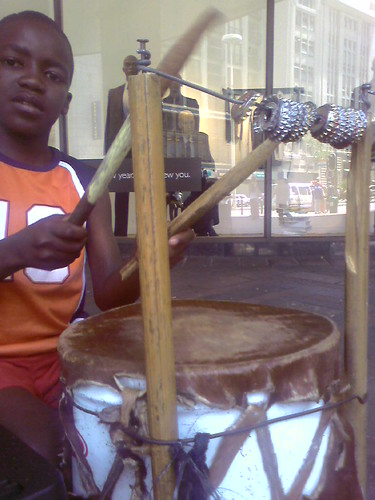
Cordelia and her kids constructed their own instrument! It takes: 2 buckets, 4 sticks, a piece of leather, some wire and lots of bottle tops!

The boys started making some noise on the streets of Cape Town, got some money and soon were able to buy a real instrument! The keyboard (600 Rand), together with the drums and the boys’ voices are the current ingredients for the Thandabantu-band.

They now play their music to collect money to go to school. During this summer holiday they made 100-200 Rand a day. School is free, but lunch (3rand/child) and travel (5 rand/child) has to be paid every day.

I sincerely hope not to see those boys the coming weeks in town. This would mean they have been able to save enough money to attend school every day this year. During the weekends and in School Holidays you can come and listen to Aviwe and Fuzile at the corner of St. Georges Mall and Strand Street in the Cape Town City Center.

Their repertoire consists of some imaginative songs. They can’t read a note… hmmm…who knows there is some musician reading this? I bet ya the boys would love to know more about music. They seem to enjoy it a lot.


(note: my apologies for the video quality, but it was taken with my phone…)
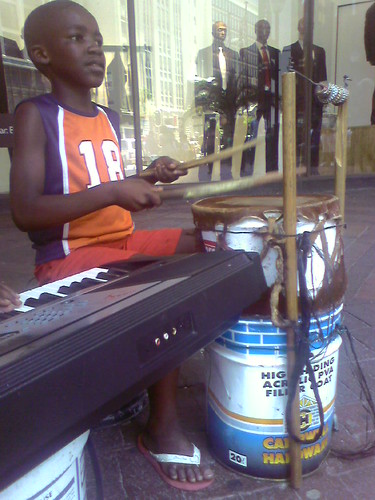
every day they play those few invented songs...
mum can't work (accident), father died

F-art

Recycled art at Kitengela

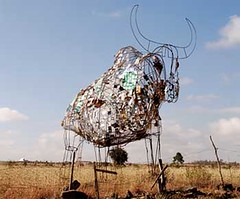
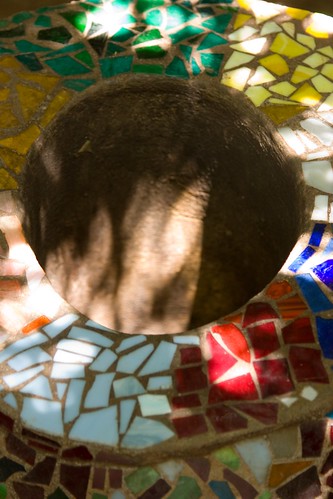
Anyone who has been to Kitengela Glass near Nairobi will instantly recognize the works of art made from recycled glass, metal and other materials. Stunning works by local artists support a huge community of people and beautify gardens, offices, institutions and homes. I bet you aren’t expecting me to talk about crap right? Wrong!

Kigengela art glass
Kigengela art glass

Creating art from recycled glass takes a huge amount of energy. The glass recycling factory produces tiles, windows and other items, fueling it with used oil, butane gas and electricity. But now they are exploring the use of human gas, yes that’s right – it sounds disgusting, smells disgusting, but what a wonderful source of energy!

Pig for poo
Pig for poo

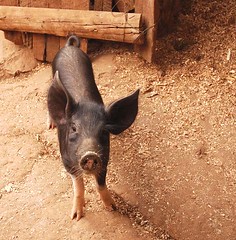
Apart from the excrement from pigs, chickens, horses, donkeys, ostriches, ducks, and geese

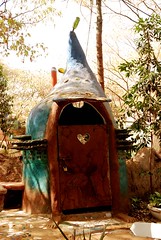
human wastes are collected … in these loos designed to keep you intrigued…

Loo seat
Loo seat

and seated for long enough to be ‘productive’.

poo bus
poo bus

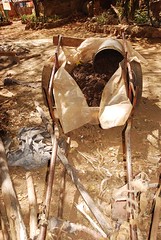
The wastes (no, not the human ones) are transported to the biogas production site in a specially designedloooong-armed wheelbarrow

Shit stirrer
Shit stirrer

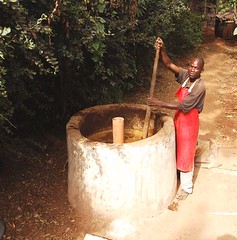
where it is poured into this big pot, where it is stirred (not shaken) by a professional shit stirrer.

Fermentation
Fermentation

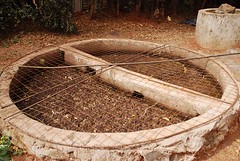
Then it flows to the fermentation pit to digest….

Fermentation  system
Fermentation system

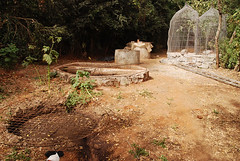
Notice how the toilets are being constructed at the top end of the system. This allows the poo to flow directly into the first tank .. it flows by gravity to the fermentation tank and then a settling tank before the sludge flows out and down a drain into another holding tank out of the picture.

The gas is piped to the household kitchen and the glass art workshops,

while the waste sludge is extracted and used on the gardens, i.e. total recycling!

In addition the Kitengela Glass factory creates an odd assortment of jobs from artists to poop stirrers, farmers and  biogas producers… for more information read about Kitengela here.

Amazing isn’t it – The first example of Art from Fart

Village Toys (Uganda)

Happy New Years everyone!

(The following series of images were sent in by Teddy (aka TMS Ruge) a professional photographer and an all around amazing individual who runs Project Diaspora.)

Ugandan village toys by TMS Ruge

The SUV was made from an old Cooking Oil container, I can’t remember the brand. The “top” is cut-out and they put other little belongs in there pulled it for hours. The wheels are made from old slippers, or sandles. Spokes from an old bicycle served as the axles. Banana stalk was used to pull the “vehicle”.

Ugandan village toy by TMS Ruge

Ugandan village SUV toy and children by TMS Ruge

“That’s my niece, Chris and her friend, Geofrey are in the picture. They spent hours in their own world pulling it across the yard.”

More pictures at the AfriGadget Flickr Image Pool and the AfriGadget Facebook Group. (join it, add yours).

Re-using a wheeled carriage for babies to make a living

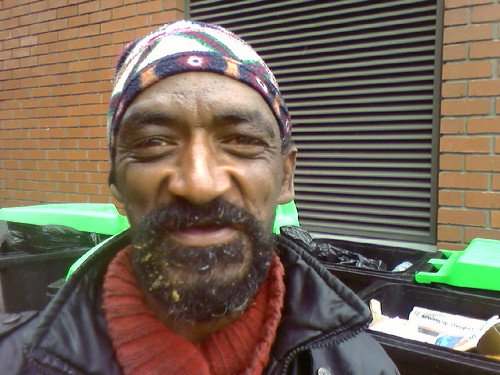
Madmoet Abrahams has been living and working on the street for more then 20 years now. He found a great way to make a living. Everyday you’ll find him in the streets of Cape Town, South Africa collecting White paper. 1 KG of White paper will pay him 23 South African Rand (approximately $2.35) at the paper scrap yard.

Madmoet Abrahams

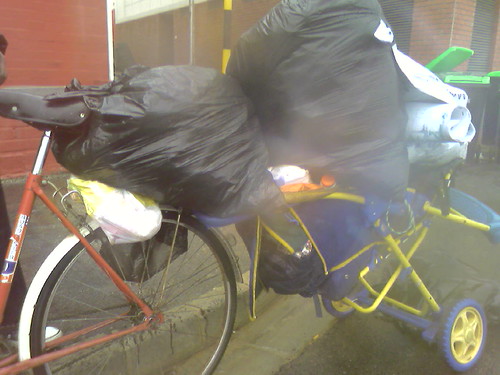
Per day he makes more or less 50 Rand. He is a hard worker. I met him in the pouring rain, which didn’t stop him from spitting through the bins in search for more paper. He saved money and bought a bicycle for 300 Rand last year. The bicycle, in combination with his creative re-use of a wheeled carriage for babies connected to it, allows Madmoet to make twice as much money per day! His big dream is to have a paid job and a house.

This friendly, clever and hard working man can be reached under the Sunlam bridge in Cape Town or somewhere on the street…

Madmoet explains where to go with the paper
The tools to success..

Paraffin Lamps and the Informal Recycling Industry

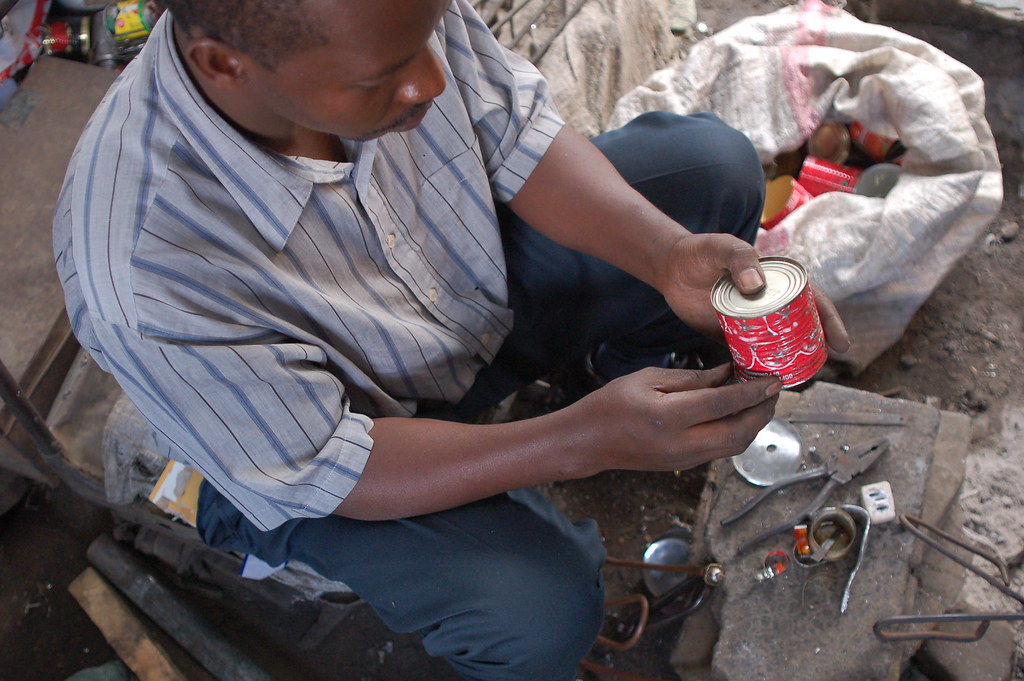
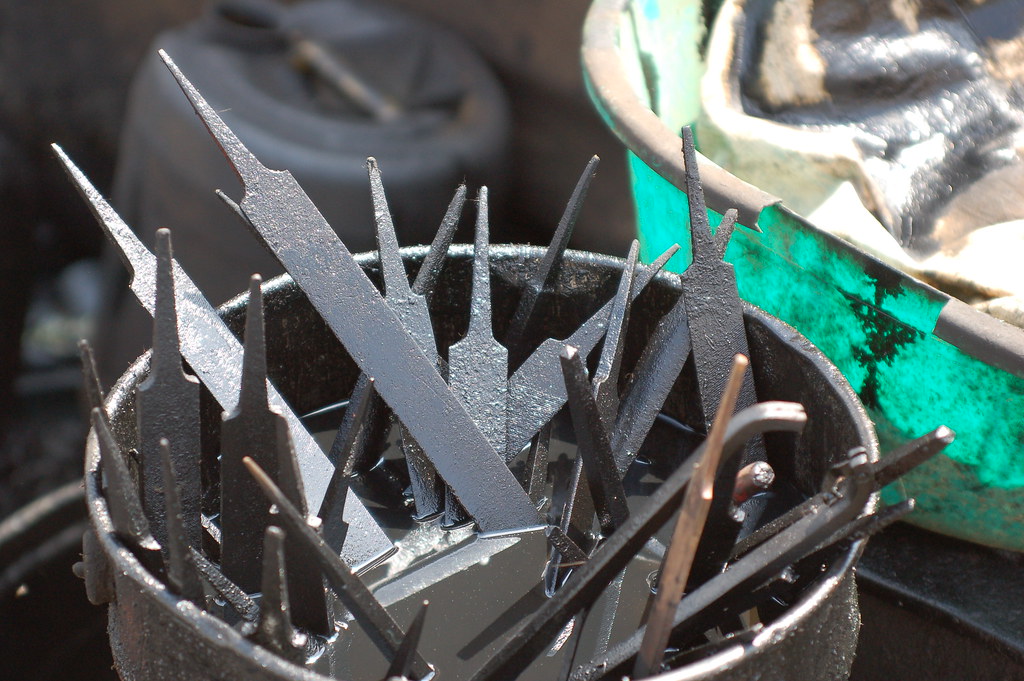
Franco Mithika works in Gikomba, an industrial area in greater Nairobi. His job is to take scrap metal tin cans and a soldering iron to fabricate paraffin lamps. Paraffin lamps are used by millions of Kenyans, especially those who cannot afford or get electricity into their home for lighting.

Creating Paraffin Lamps in Gikomba

It costs about 110/= Kenyan shillings to make, and it sells for around 150/= ($1.90). You can buy them wholesale for 1550/= ($20) for 24 pieces. It takes about a minute to make one (less for the truly gifted fabricators).

Here is a video of him making one:


Thinking about the unofficial recycling industry

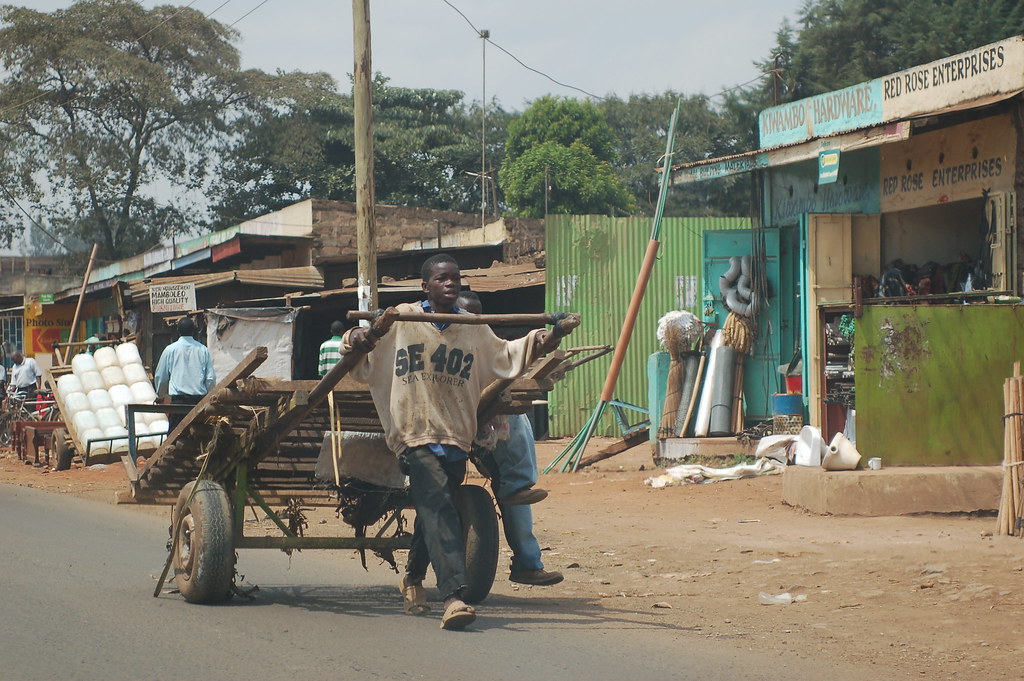
What’s particularly interesting here, is that this scrapes the surface of a rather larger recycling industry that hums beneath the surface of the city. How it works is this. The youngest and poorest go around the city and collect scrap metal of all types. These are then taken to a buyer who sorts them into their different types. This is who people like Franco then buy from and create their wares.

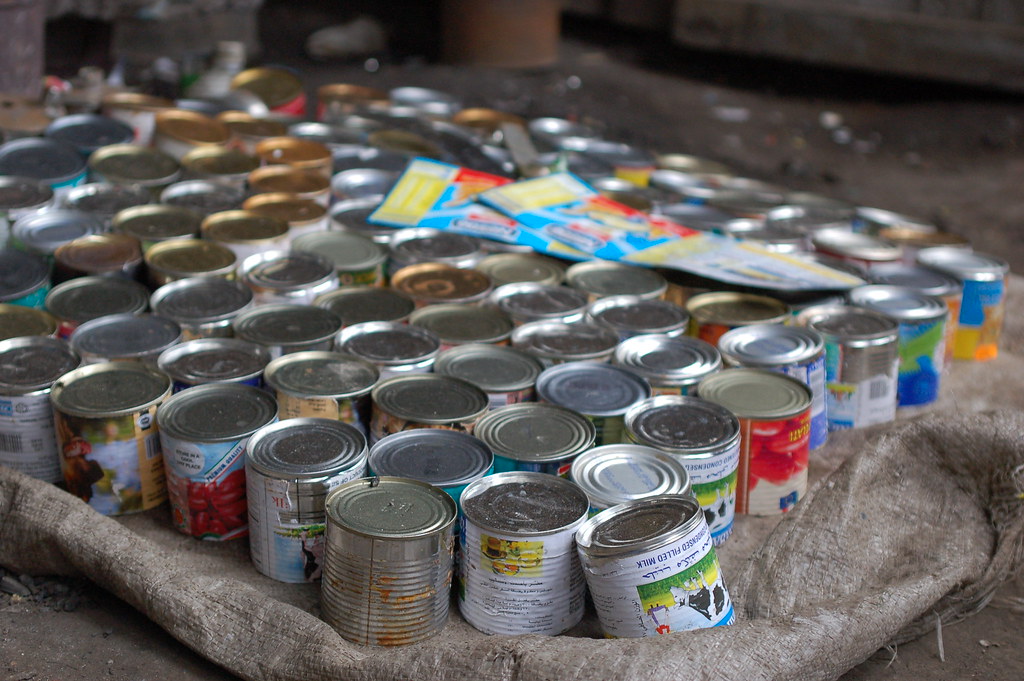
The scrap metal picked up gets sold for just a few shillings per kilo. When sorted, the tin cans that Franco buys, are sold for 300/= ($4) per kilo.

So, there’s a rather efficient system at work. It’s run by entrepreneurs who figure out a way to make things work. A byproduct is that everything (metal) is used, and much less waste than there would be otherwise.

Gathering and transporting the scraps:
Informal Recycling Industry

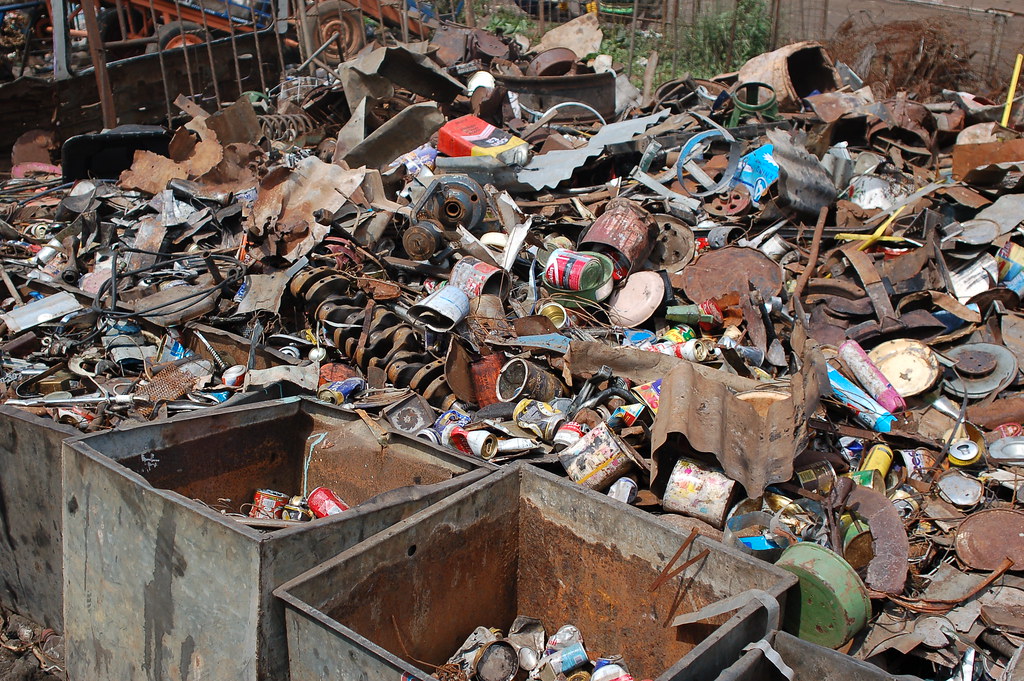
The scrap sorting place (Kawangware):
Informal Recycling Industry

The cans for the paraffin lamps sorted:
Creating Paraffin Lamps in Gikomba

Other “sorted” scrap metal items:
Informal Recycling Industry