Win a Copy of William Kamkwamba’s Book!

If you’ve been reading AfriGadget for a while, you know of a name that keeps popping up over and over – William Kamkwamba. He was first written about by another blogger friend Mike McKay and then subsequently covered here on AfriGadget a good 3 years ago. His windmills and the story behind it are an inspiration for many. There is now a book, a documentary and a foundation all set up around the inspired story of windmills from Malawi.

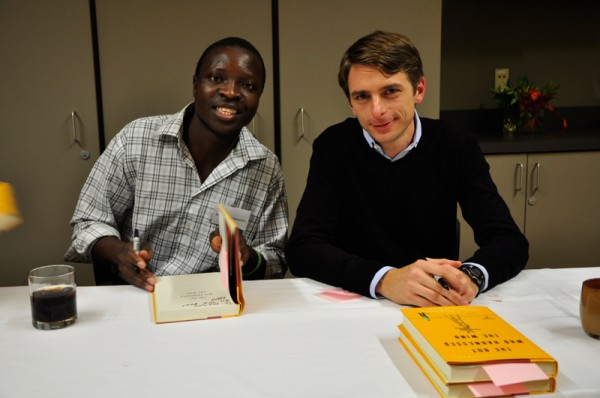
William Kamkwamba and Bryan Mealer at a book signing

Win a copy of “The Boy Who Harnessed the Wind”

As luck would have it, I have 2 extra copies of William’s new book. I’d like to share that with you, the readers of the blog. To do that, I want to challenge you to send in an AfriGadget-like story, picture or video. Just write it and attach the pictures in an email to main@afrigadget.com. I’ll review them and pick the ones that I think best fits the blog. It’ll be posted here with attribution to you.

We’ve got two weeks until Oct 31, so I’ll give one book away each week. Let’s see what you’ve got! And, yes, I’ll mail the book anywhere in the world.

Note: the best AfriGadget stories come with pictures, so make sure you send those in as well.

William in the news

He’s been doing his book tour in the US this month, hitting some pretty big shows, including ABCs Good Morning America and the Daily Show with John Stewart (videos below).


William Kamkwamba on Good Morning America

The Daily Show With Jon Stewart Mon – Thurs 11p / 10c
William Kamkwamba
www.thedailyshow.com
Daily Show
Full Episodes
Political Humor Ron Paul Interview

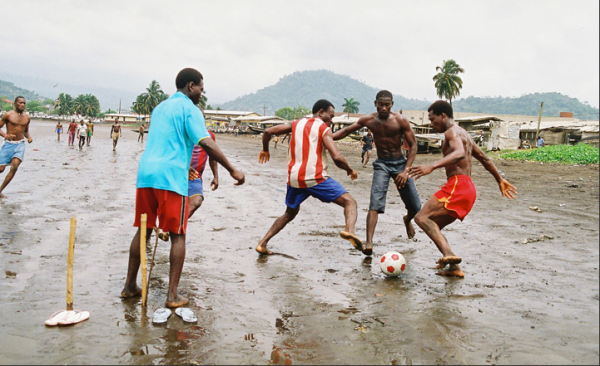
Football: Made in Africa

Football made in Africa

Football Made in Africa is a site put together by a Belgian outfit called Take Five that will air 50 shows that are 1m30s each. It’s a push for themselves and their content before the 2010 Football World Cup taking place in South Africa next year. It’s extremely well done, but that’s not why I’m writing about it here on AfriGadget.

Ever wonder how those plastic bag footballs are made?

Here’s how to use a condom to create a football bladder.

A Wearable Flexible Solar Panel Vest

This is a proposed way to maximize the usage and efficiency of the KVA Flexible Solar Portable Kit by Dominic Wanjihia. Dominic was awarded one of the Flex Kits at the recent Maker Africa Faire in Accra after showing off some amazing new ideas.

One of the cheapest form of transport in Kenya is the “Boda Boda” literally meaning “Border-to-border”, a bicycle ride from one countries boarder immigration offices through no-mans land to the immigration offices of the bordering country customs office.
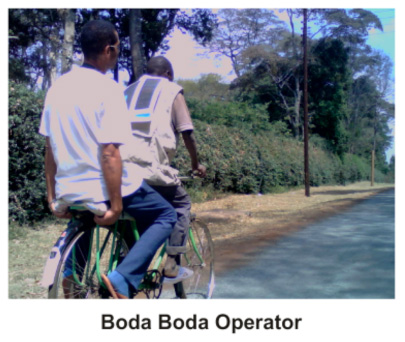
Solar powered vest for bodaboda bicycle taxis

This mode of transport is non discriminatory and is used by people of all walks of life. from school children, market goers, workers, business persons, etc. The popularity is partially due to the speed and convenience as one does not get stuck in traffic. In the Lake basin town of Kisumu there are estimated to be over 500,000 BodaBoda’s. In the whole county, in excess of 1,500,000

The BodaBoda rider normally works from as early as 4.30a.m. to as late as 10.00p.m. depending on security in the area. He relies greatly on his mobile phone for clients to call for his services. His peak cycling times are early morning, lunch hour and dusk as persons head home from school and work. Translates to 4 – 5 hours in total daily riding time.

Due to the lack of know how and the complexity of electronics, the lack of power storage (i.e. a battery, and the cost) the Cycle dynamo is only effective for charging items and lighting while he is riding. Also, due to space or lack of, cost, insecurity and theft, attaching “Hard” Solar panels to the bikes has never been a viable sustainable option.

However, with the introduction of the Flexible Panels I believe wearing the panels on his back eliminates all these constraints. It also means he is generating power from sun-up to sun-down, an average of 12 hours a day.

Attaching the flexible panels on his back ensures:

  1. His phone is always charged guaranteeing customer accessibility
  2. He has light at home from the LED’s so saves on heavy power bills
  3. He always has an emergency light with his – LED
  4. The panels will not get stolen
  5. One can also offer charging facilities to client being carried

Other users
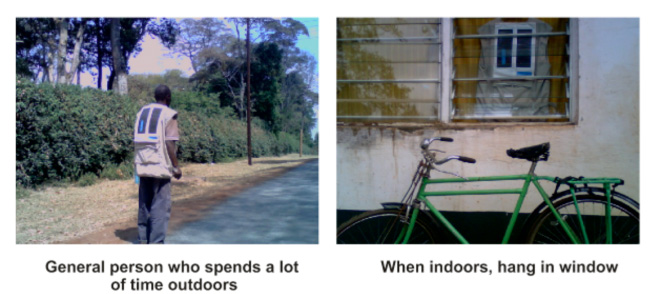
The BodaBoda is not the only potential user of the Flexible Panel by wearing it. Anyone spending long hour’s outdoors is a candidate. The farmer, fisherman, hawker’s and peddlers, city council outdoor workers, tourists, campers and hikers – just to mention a few.
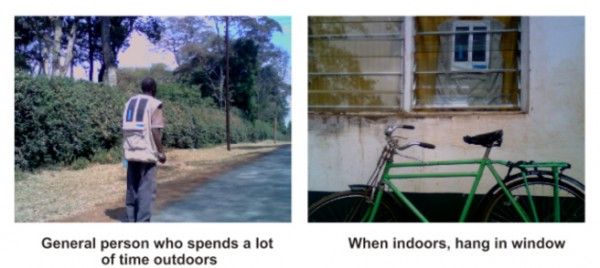
Solar panel on a vest design by Dominic Wanjihia from Kenya

Attaching the Panel
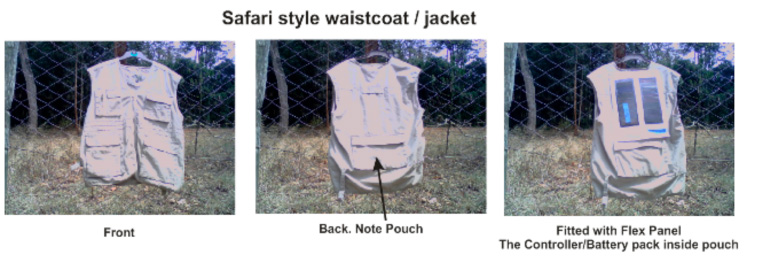
It can be attached in a variety of ways. Velcro, Pop Buttons or simply attach Rucksack like straps so it can be worn with any garment. In the latter case the small pouch containing the controller and battery is attached to the back of the panels with Velcro.
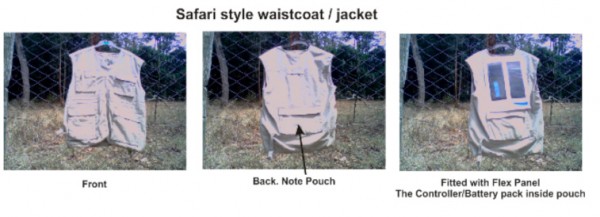
Solar panel on a vest by Dominic Wanjihia in Kenya

If you would like to get in touch with Dominic, you can reach him at dwanjihia@yahoo.com or by phone at +254722700530

Hacking the FLAP Bag!

This is part of an ongoing series of posts on the FLAP bag project, a collaborative effort by Timbuk2, Portable Light and Pop!Tech. We at AfriGadget are helping to field-test these bags that have solar power and lighting on them, and get interviews of the individuals using them.

I was a little concerned when 5 of the 10 FLAP bags that I received before I left for Africa weren’t assembled – just fabric, thread and electronic components. It would mean that I’d have to find tailors in each country to put them together. However, it turned out that one of my favorite parts of getting the FLAP bags to Africa has been working with the tailors.

What I end up doing is explaining the bag and how it works, then showing them the one that isn’t put together and asking them if they would be willing to duplicate. If so, they can keep the bag. Then, I offer a challenge, taking the two-paneled Portable Light Kits from KVA, I then ask them if they could make something from their own materials, with their own designs, from it.

They had 2-3 days to come up with an idea, pick the fabric and create the bag. I then bought it from them for $20.

Kenya Bags

Kenya bag 1

Kenya bag 2

Kenya bag 3 - AfriGadget

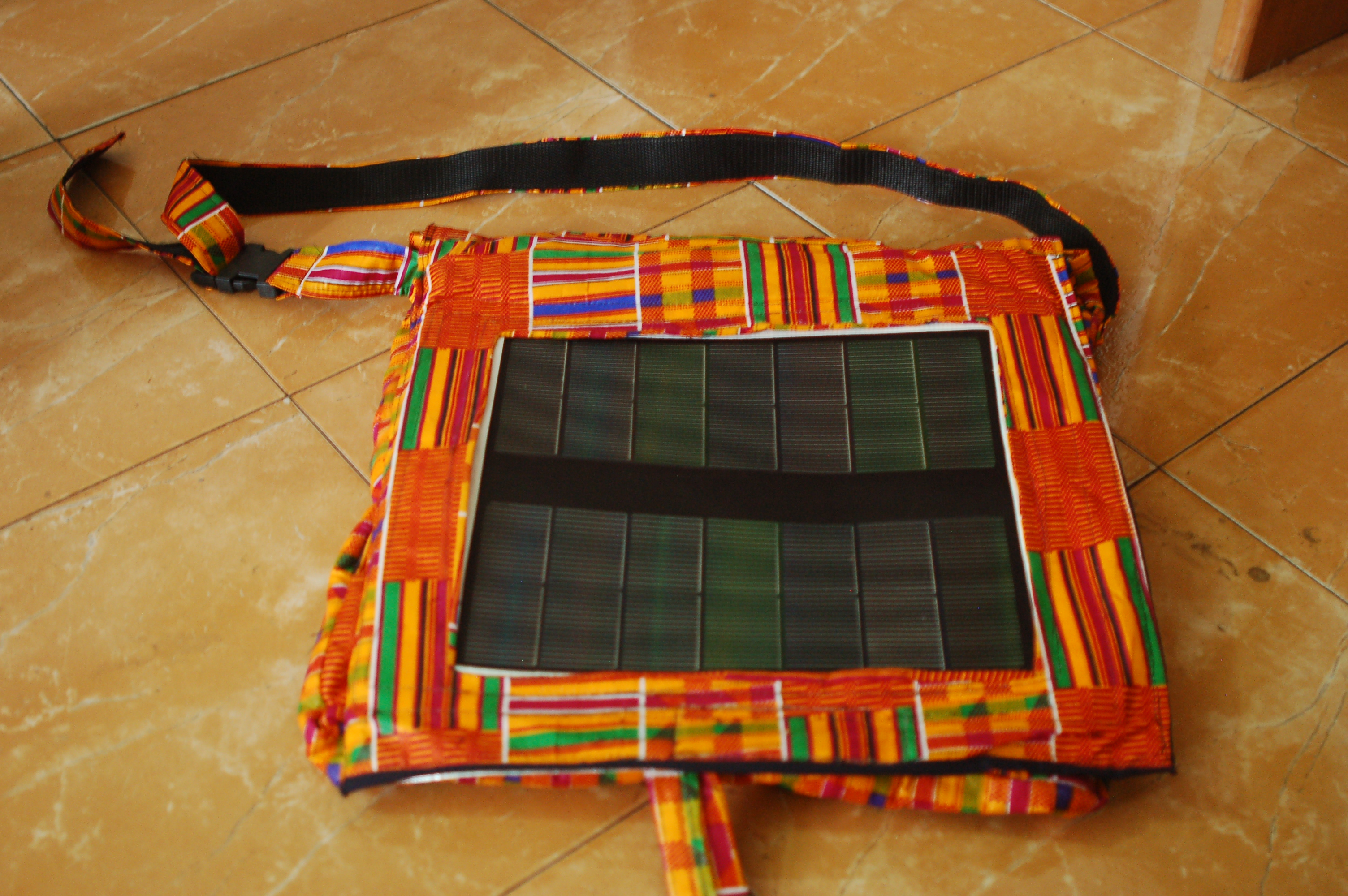
Ghana Bags

Ghana bag 1

Ghana bag 2 - mud cloth

It should be noted that the gentlemen working on these had very little time to come up with their ideas and then implement them, as I was very much on the move. The local cloth use in Ghana was amazing, and I only wish the Kinte cloth (orange) one was done with real Kinte cloth instead of a print. The Kenyans used more ordinary fabric, but they were ingenious with the details around use, size and practicalities around security.

To really see the creativity at play in the Kenya bags, you have to either see them in person, or a video. Since I don’t have the bandwidth for a video now, that will have to come later.

A Kenyan Designer and Tailor with the FLAP Bag

This is part of an ongoing series of posts on the FLAP bag project, a collaborative effort by Timbuk2, Portable Light and Pop!Tech. We at AfriGadget are helping to field-test these bags that have solar power and lighting on them, and get interviews of the individuals using them.

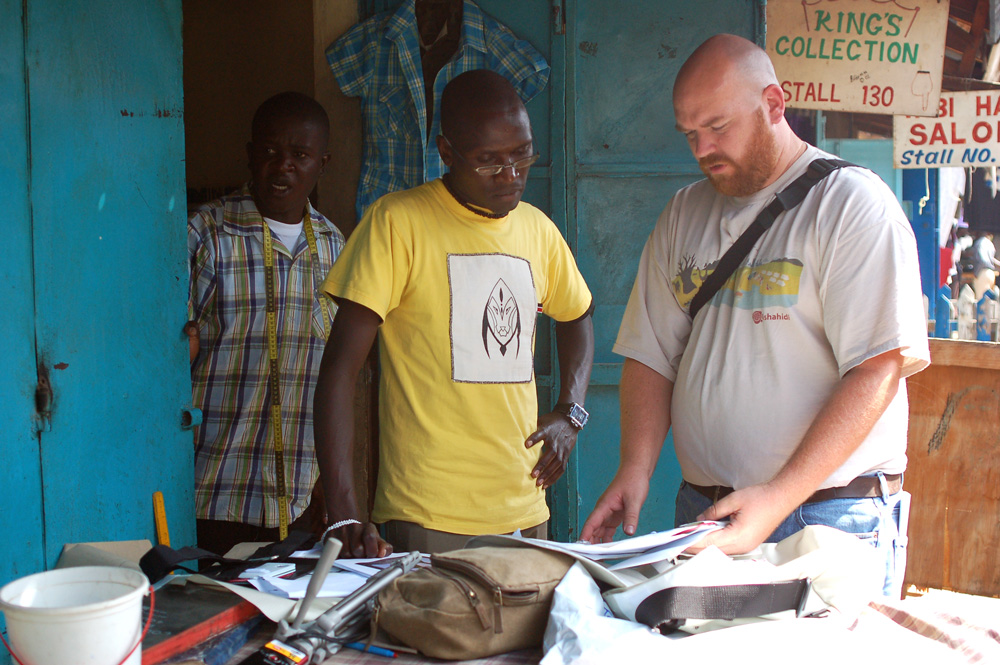
Stephen Omollo and Erik Hersman

Jericho Market is a small market tucked away behind the industrial area in Nairobi, Kenya – near to Buruburu. It’s where you can find a lot of artisans who work on cloth-based projects, from clothes to bags and everything in between. I took off with David Ngigi, a local videographer friend of mine, to see who we could find. I brought two of the unstitched bags, two Portable Light kits and one completed bag as a sample.

The first person we spent time with was Joseph Muteti, a soft-spoken, 18-year veteran of the tailor trade in Nairobi. He specializes in making school bags for children and messenger-type bags. His bags are generally sturdy, with an added flair of embroidery to set them off for his customers.

Next up was Stephen Omollo, an energetic young designer who works on textiles ranging from shirts to bags. Style and usability are both important to Stephen, and his primary desire is to create items that people are proud to wear.

Interestingly, both Stephen and Joseph thought the bags were too large. Stephen wanted to cut in half, and Joseph by about a third.

Joseph Muteti - a tailor in Kenya