A pilot project placed an electonic collar containing GPS and GSM units on Kimani, a bull elephant who was the last surviving member of a 5 elephant group with a penchant for raiding farms to eat crops. This collar allowed park rangers to track the elephant’s movements using Google Earth / Google Maps. The project also allowed park authorities to monitor animal locations at all times and acted as a deterrent against the poaching of this important resource.
Crop raiding is a huge problem on farms bordering parks and reserves as a herd of elephants or other animals can wipe out entire crops on a single night destroying the livelihoods of the farm owners.
The coolest side benefit of the product though was when the project team figured out that they could create a virtual “geo-fence” and trigger alerts whenever Kimani the elephant stepped outside this virtual fence – an occurrence that indicated that he was probably on his way to a village to carry out some crop raiding.
The set up used a hardware and software solution that sends text based messages in real time with location data over GSM to park rangers whenever Kimani approaches a park fence that is close to a farm.
This is yet another great example of why the use of mobile phones continue to be the computing platform of choice in many ingenious and innovative homebrew technology solutions in Africa.
Click through the links below to articles and video about this project.
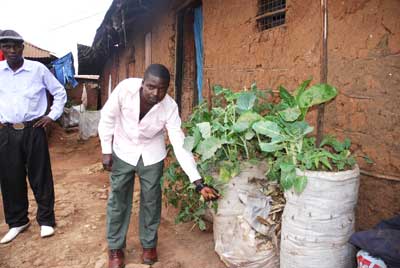
I witnessed some amazing innovations in Kibera and conclude that people have adjusted to their situation and are making the most of it. Because of the stress associated with limitations on land, energy, water, and food the people have found innovative ways of surviving. This post is mainly about farming.
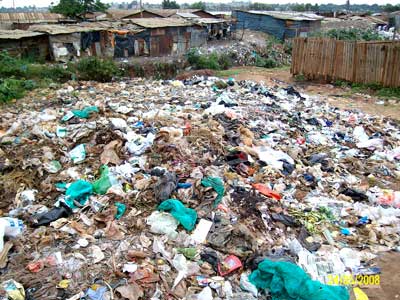
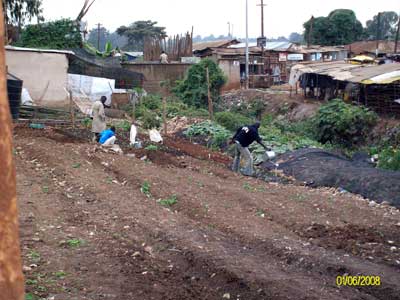
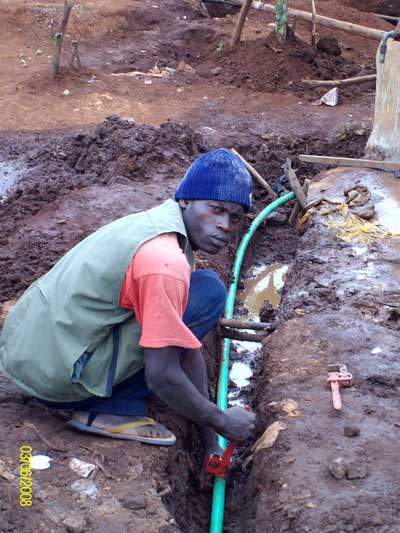
Before the clean up and farmingClearing land of garbageinstalling irrigation
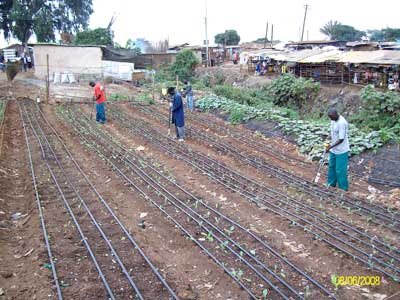
Irrigation taps the mains water and supplies nutrient rich feeds from organic fertilizer produced on the site from crops and worms, yes they harvested local earthworms to start vermiculture.
Worm farm – just a tray with kitchen wastes feeds a bunch of earthworms that produce organic liquid manurePlanting seedlings, cleared waste is bundled under shade cloth and planted with pumpkin to create a green soil erosion barrier
Check out the planting implements, a PVC Pipe adapted to deliver seeds into a perfectly dug hole! This was invented to help with the back breaking work of planting.
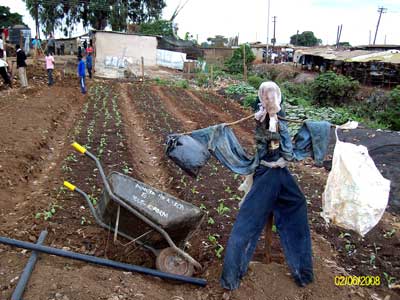
ScarecrowGarbage dump transformed this is the Kibera organic farm – 3 months after clearing the dump
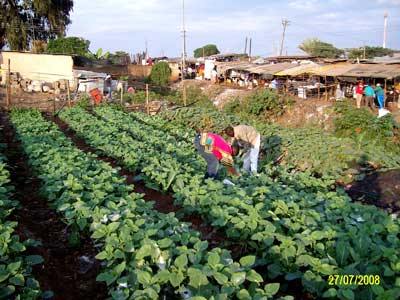
After 3 months the community of 30 families were harvesting, eating and selling organic produce. Yum! Impossible to ignore how a dirty dump turned green, everyone wants a farm in Kibera now. This group is now selling their expertise to raise funds and help others.
Natural Bean Tenderizer
There was a smouldering fire where banana leaves were being reduced to ash, then the ash dissolved in water and the brown murky astringent solution sold for Ksh 50 ($.80) per 250 ml in vodka bottles! This is a bean tenderizer reducing the time to boil red kidney beans by 50%! Imagine the savings on charcoal/fuel.
Safe Dispensing of Fuel
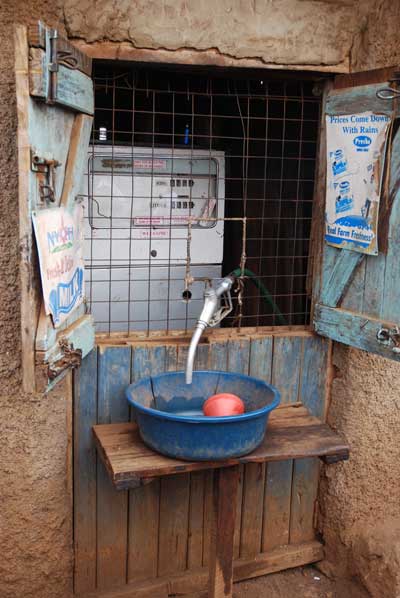
Kerosene is dispensed from a caged petrol pump for security
Notice that there was no protection around the farm or it’s equipment. Apparently the reputation of these ‘reformed criminals’ is enough of a deterrent.
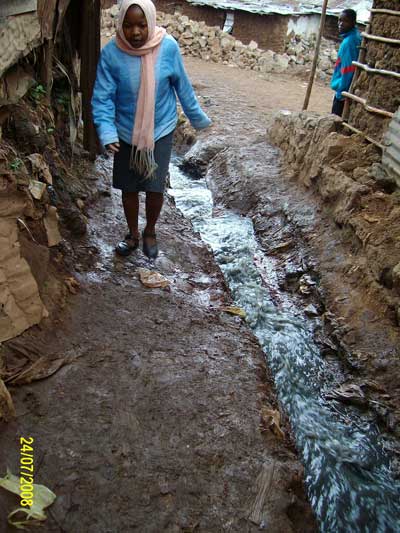
Kids in Kibera
Life might be hard in Kibera but yet when you visit you can’t ignore the vibrancy, colorfulness, camaraderie amongst the inhabitants it was one time that I got the feeling that people here love life
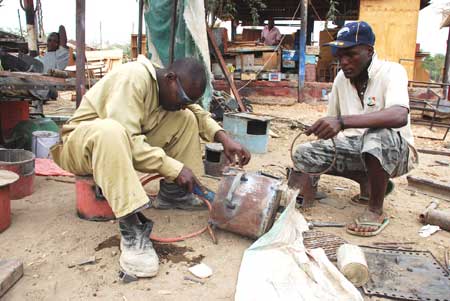
Bush camping is one of the greatest pleasures of living in Kenya – only if you have the right equipment. On a recent hastily planned trip to Lake Magadi hot springs we discovered too late that we’d forgotten the jiko (charcoal cooking stove). Stopping in Magadi town which serves only one industry, the Magadi Soda Company, we had one made for us right there and then in a very active jua kali workshop.
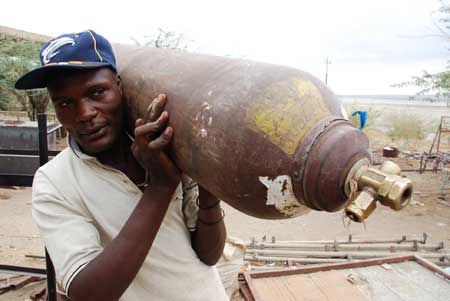
It starts with a discarded gas cylinder
I always wondered where the metal for jiko’s came from – In this the many discarded gas cylinders are chopped into segments to make up the body of the jiko.
Welding the finishing touches
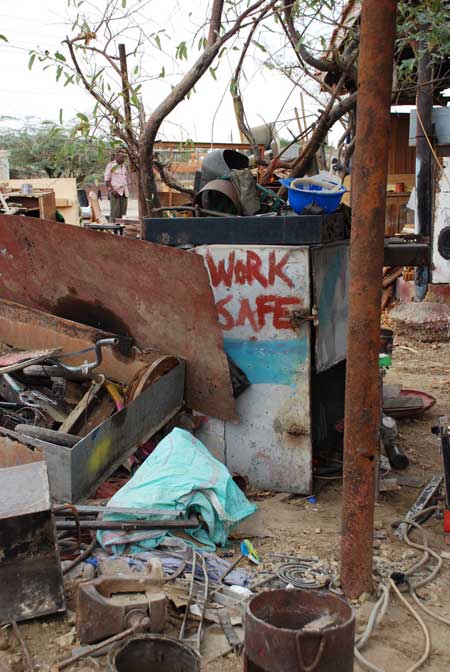
There seems to be no power shortage here, a mess of electric cables and metal and wooden waste remnants from the soda company is an active business for about 20 artisans making furniture, gates, and jikos for the staff of the soda company.
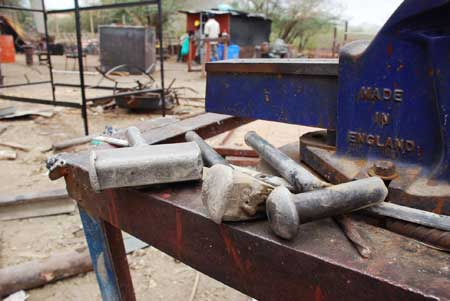
Everything was home made including the tools
Corporate safety message hasn't quite translated
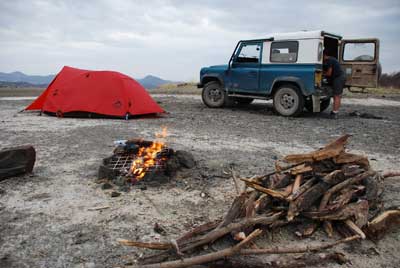
A ten minute job turned out into a one hour event and a thousand shillings later ($20) we take off proudly with our extremely heavy stove. That’s when we discover that there is no charcoal to be had in this part of the world anyway. We ended up with a 3 stone fire.
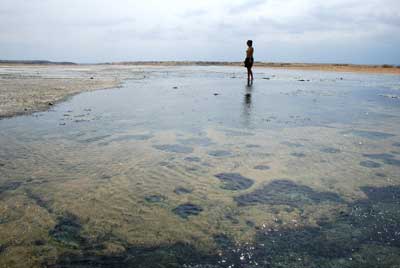
A flat piece of salty earth was our camp at the "Community campsite"
At dinner time we realized that we’d forgotten most of the food anyway (camping note to Paula: don’t believe him when he says “I already put it in the car” ).
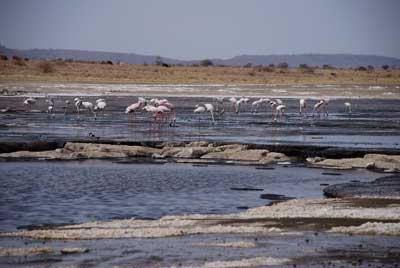
Magadi is spectacular for bird viewing
Nevertheless, the hot springs were fabulous.
Don't believe the guide books version of the hot springs as "tepid" - these springs are excruciatingly hot
The Jiko came home and has not yet been used – and thinking about it now … should I be worrying about cooking on something made from gas cylinders? Is it just iron or could there be lead in this?
Or How to get your camel milk to market in 40 degree C climate.
My brother Dominic Wanjihia invented this gadget which he calls Fine Lined Evaporative Cooler, for rural application in Somalia – the cooling of camels milk for transportation . He was working on a project for VETAID, Somali Pastoral Dairy Development Program – SPDDP,in Burao, Somalia June 2008. All this content belongs to Dominic who has allowed me to post it here- please seek his permission to use this content elsewhere dwanjihia@yahoo.com
Cool-box design Fine Lined Evaporative cooler
Evaporative cooling technology
The evaporative cooling concept has been used for centuries in countless applications. Cooling occurs when a fluid changes state from liquid to vapor. Put simply, evaporation. In order to evaporate, the liquid requires energy or heat. It acquires this heat energy from its immediate surrounding. As the surrounding gives up this heat, it lowers in temperature or cools.
The rate at which evaporation occurs depends largely on two main factors, the amount of heat available and the humidity in the air.
The cooler must also be shaded from direct sunlight otherwise the surfaces absorb UV heat and warms up, becoming ineffective as a cooler.
In short
Evaporative cooling devices work most efficiently in windy, dry and shaded conditions
Charcoal cooler
Everyone knows how to make charcoal fridges. After carrying out extensive tests on evaporative coolers in hot arid Burao, Somaliland, with day temperatures as high as 36OC in the shade, the charcoal would absorb ambient heat from the air and as opposed to cooling, would warm up the interior compartment.
Imagine wearing a wet thick winter jacket under the palms at a breezy beach. The jacket acts as a wetsuit and will insulate your body preventing heat from escaping.
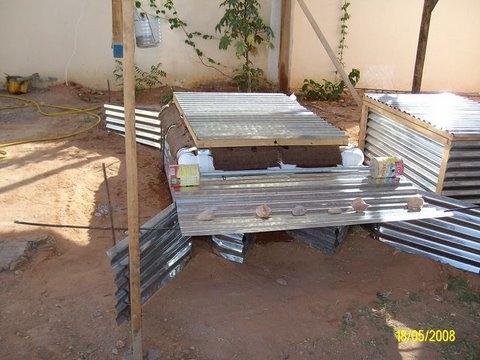
Fine lined cooler
However, imagine wearing a wet skintight t-shirt in similar conditions. The water evaporates quite rapidly and cools your body.
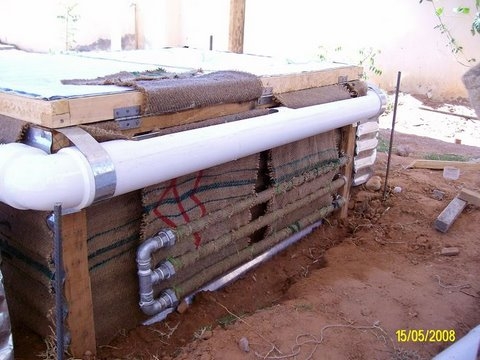
I applied this concept to the cooler prototype pictured and achieved startling results. The cooler would drop as low as 15.5OC at night when temperatures averaged 25OC and maintain under 17OC during the day at average temps of + 32OC.
Evapocooler
Construction
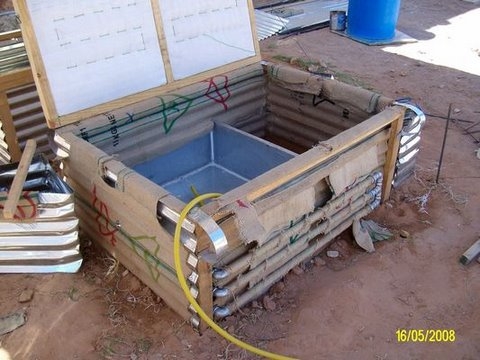
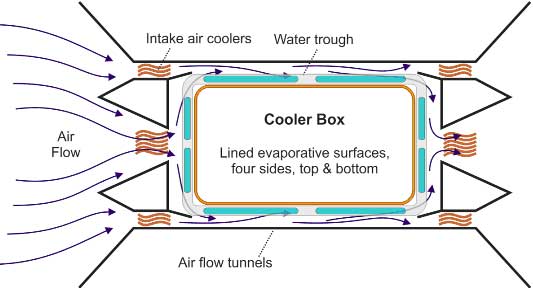
An elevated metal box is lined interior and exterior with a fabric. In this case I used locally available corrugated galvanized iron sheets for the container and sisal sacking fabric for lining. The upper ends of the fabric overhang in a water trough that rings the top of the cooler. Capillary action causes the water to slowly trickle over the inner and outer surfaces. A small vent keeps the interior air circulating and wind guides or tunnels direct air flow over the exterior surfaces. A low speed small solar powered fan can be incorporated in areas where there is not a constant breeze.
How it works
The circulating air in the interior causes evaporation on the wet surfaces. The necessary energy is acquired from the contents hence cooling them and is transfers to the iron sides.
Wind guides or tunnels direct an airflow over the external sides. The evaporation that occurs acquires energy from the sides causing further cooling of the interior.
Convection current system to increase water bath cooling
Construction design
Cool-box with water-bath interior for rapid milk cooling application– Collection Point Cooler
Walk-in cold-room for vegetable storage
Vehicle mounted for long distance transporters
Features (Comparison to conventional charcoal coolers)
Very simple construction
Corrugated galvanized iron or GI sheets increase the surface area
Wind tunnels guide air flow efficiently over evaporation surfaces
Air flow coolers at tunnel entrances
Being galvanized, the sheets are long lasting
GI sheets are affordable and available in most rural areas
Secondhand sacking fabric is available in virtually every vegetable market
The simple capillary action dripping system replaces more complicated dripping apparatus
Convection current system to increase water-bath cooling efficiency
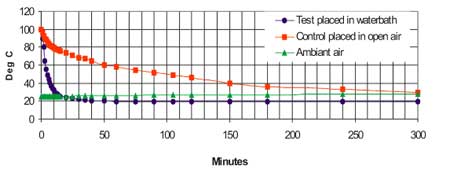
Cool box design with waterbath for rapid drop in temperature of milkThe design simplified
In hot arid regions, cooling the warm ambient air before it reaches the wet evaporation surfaces increase efficiency. Note. Setup for airflow from either direction
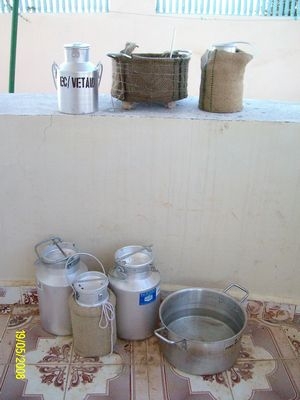
level coolers – achieved low’s of 16OC at ambient temp of 30OC +Rapid Temperature Drop Test 4 lts boiling water in aluminum milk churn placed in water-bath at 16OC
For further information and other rural development concepts and innovative designs, Dom can be reached on
We use cookies on our website to give you the most relevant experience by remembering your preferences and repeat visits. By clicking “Accept”, you consent to the use of ALL the cookies.
This website uses cookies to improve your experience while you navigate through the website. Out of these, the cookies that are categorized as necessary are stored on your browser as they are essential for the working of basic functionalities of the website. We also use third-party cookies that help us analyze and understand how you use this website. These cookies will be stored in your browser only with your consent. You also have the option to opt-out of these cookies. But opting out of some of these cookies may affect your browsing experience.
Necessary cookies are absolutely essential for the website to function properly. This category only includes cookies that ensures basic functionalities and security features of the website. These cookies do not store any personal information.
Any cookies that may not be particularly necessary for the website to function and is used specifically to collect user personal data via analytics, ads, other embedded contents are termed as non-necessary cookies. It is mandatory to procure user consent prior to running these cookies on your website.