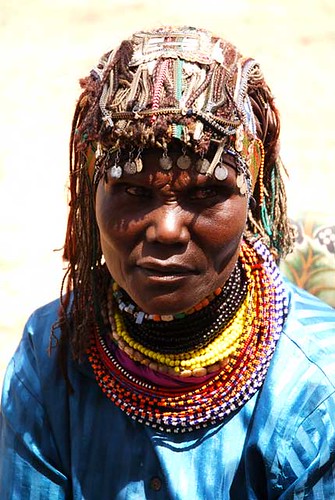
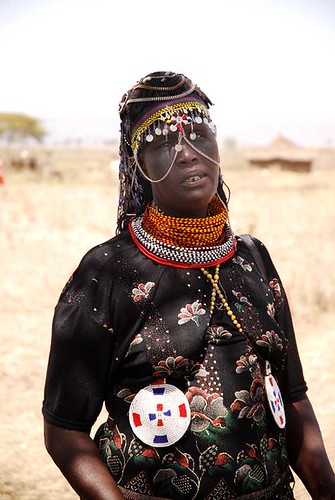
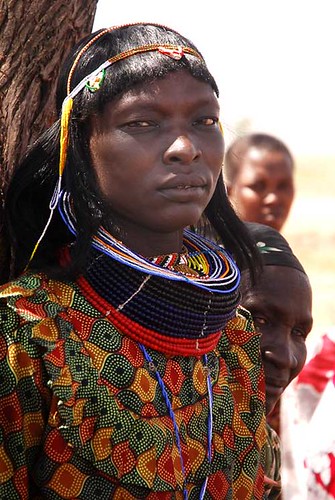
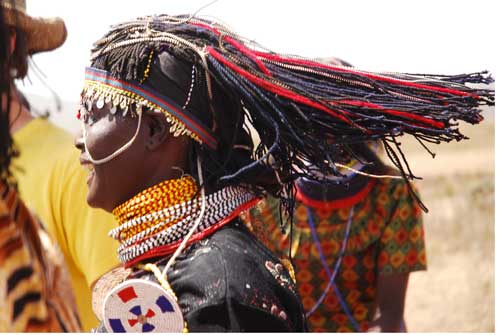
Did you notice the creative head dresses? Zippers may have been invented in USA but nobody would have imagined they’d be used for head dresses. I was so awed by the outfits that I forgot to ask where they got all those zippers from – I can’t get rid of the image of all the village men wondering about with gaping flies.
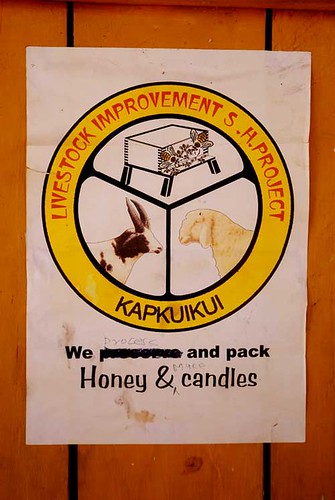
You know it’s a great jua kali project when you see the logo
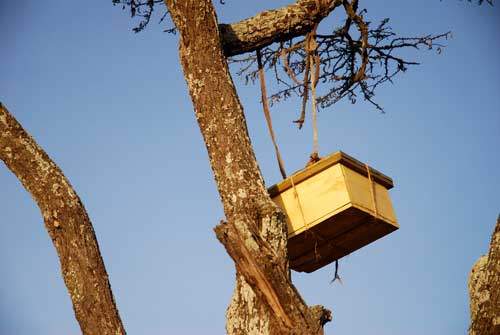
Honey is one of the most valuable products of the drylands of Africa. It can be obtained by following a little bird called a honey guide to a bees nest in a tree, whereupon one raids the hive. Or bees can be farmed…in most places a bee keeper simply hollows out logs to make perfectly acceptable hives for local consumption. for commercial purposes however, Langstroth hives are universally thought to be superior to the traditional log hives found in Africa – the box shape make them easy to stack and move around, and the movable frames guide bees to build combs in an organized manner making comb extraction easy. These hives also have a queen excluder, a mesh grid, usually made of wire or plastic, sized such that worker bees can pass through but the bigger queens cant. This keeps the queen from laying eggs in the honey combs called supers leading to cleaner honey. There are so many NGO’s, GOs and religious Orgs introducing these bright yellow langstroth hives across the Kenyan landscape.They don’t always catch on though – in rural areas people still prefer the logs…
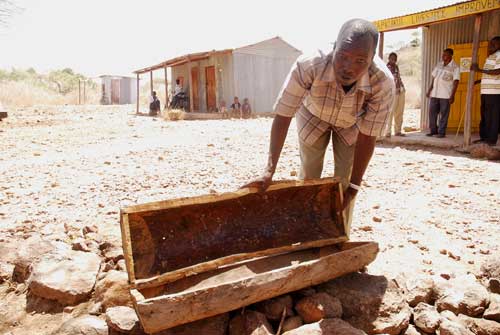
Traditional hive
Traditional log hives are hollowed out logs usually cut from specific tree species with the permission of the local chief. They are hung high in trees and the inside is rubbed with leaves of plants that attract bees – a practice that has been going on for eons. The bees enter the hives through a tiny hole and build their combs willy nilly throughout the space, it’s inefficient and the honey is of a lower quality as the larvae are all mixed up with the honey combs. Not very good for a business approach… or should I say Beesness?.
Langstroth hive in Baringo Kenya
Logic would suggest that the Langstroth hives which produce cleaner honey and they save trees should be favoured right? Wrong! These modern hives are produced by experts in cities and cost a good $100 – far beyond the reach of anyone living in rural Kenya. It’s also rumoured that these hives are easily broken into by honey badgers, over heat in the dry climate of north Kenya driving bees away, and are expensive to maintain. On a personal note, I for one, find them extremely ugly too.
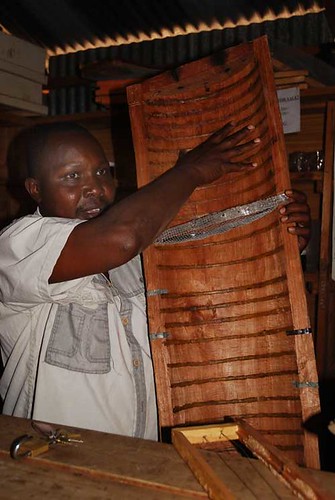
Modified traditional hive
One bee keeping cooperative in Bogoria has figured out a cunning way of modifying traditional log hives to produce more honey. A bee excluder is made using coffee mesh.
Symon demonstrated how beeswax tracks are laid down to guide the bees where to build their combs in neat lines. Cost? One third of the Langstroth hive.
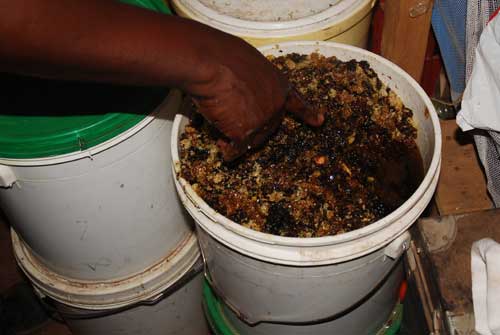
Bucket of raw honey
The honey is collected at night by naked men (yes totally naked …) they say that this prevents one from getting bees stuck in your clothing… I asked about the possibility of getting stung in sensitive places, they said the bees were far too civilized for that…but yes, people had fallen from the trees and been found comatose and butt naked at the tree base…
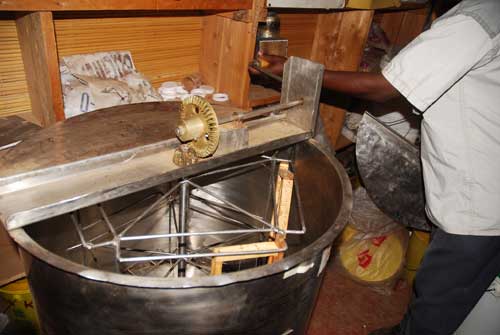
Honey extractor
Raw honey with comb is sold to the local cooperative where wax is separated from honey. The machine is another jua kali item bought in a workshop in Nairobi.
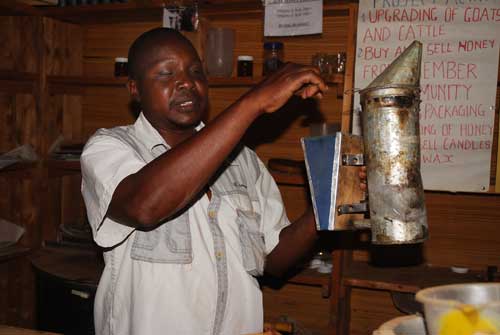
Home made bee smoker
Bees are smoked out of the hive using a home made smoker.
Production by 40 bee keepers was 8 tons last year, each Kg of raw honey was bought by the cooperative for Ksh 80 ($1), and sold on raw at Ksh 100, or processed and honey sold at Ksh 600 per kg ($8).
8 tons of raw honey were collected in 2008 – this is valued at Ksh640,000 for the 40 bee keepers in the business.
The wax is not wasted but converted into candles which sell for Ksh 10 each ($ 0.12).
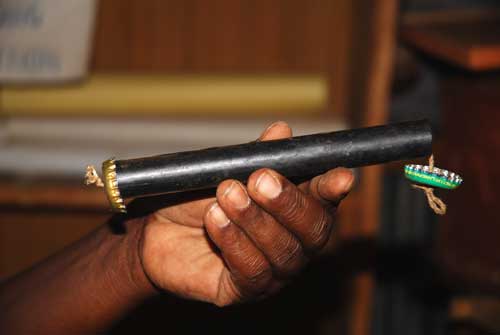
Candle making gadget
Using a jua kali gadget for making candles, comprising a string, a piece of conduit pipe and two beer caps….ingenious!
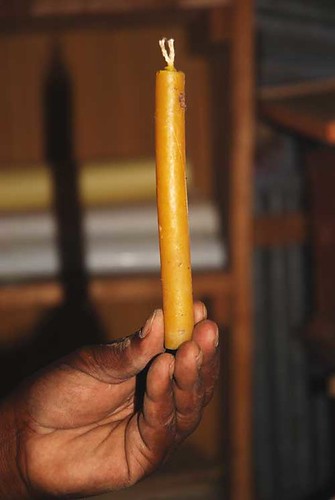
Bees wax candle
Producing the sweetest smelling cheapest candles I’ve ever used. They claim they burn much longer than paraffin candles. Besides they smell delicious
Some sweet facts
·The dry lands of Kenya are the important honey producing districts in Kenya – the semi arid climate, diversity of flowering plants and easy access to fresh water makes it perfect for bees. Kenya is the fourth largest producer of honey in Africa 22,000 tons, China is the worlds largest producer at 299,000 tons (USA produces 70,000 tons) (figures for 2005).
·The group in Baringo produced 8 tons of honey last year.
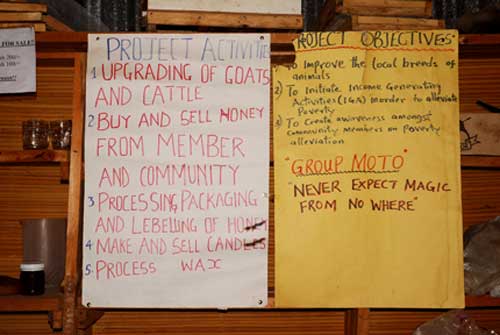
I love their motto for hard work - "never expect magic from no where".
·Kenya is a world center of bee diversity with over 3,000 species (about 10% of the worlds total number of species)
·Only 150 species or thereabouts produce honey in Kenya.
·Contrary to popular belief, most bee species are harmless… they have no stings
·The Kalenjin people immunize themselves to bees by purposely stinging babies with bees
·In many pats of Africa, honey is an important component of dowry or bride price – a kilogram being made as part payment for the bride – symbolic of the sweetness of sex – or so I’m told 😉
·Bees pollinate most of the crops that we eat
·Bee keeping is most productive in natural habitats, and is a one of the few forms of resource extraction that does not destroy the environment.
The sour facts
·Bees in USA and Europe are disappearing fast – a condition described as colony collapse disorder (ie. Nobody knows why it’s happening). Africa is unaffected so far making honey production a very sweet deal.
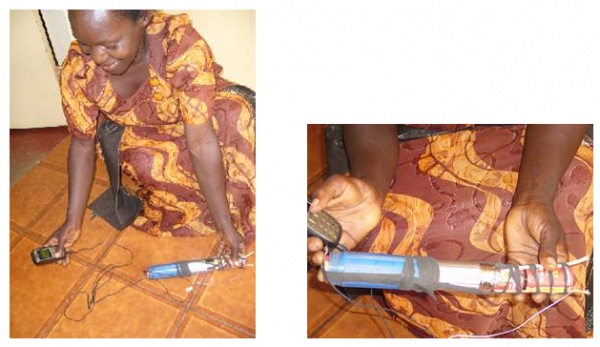
She uses ordinary size D batteries that are readily available in the village to power radios and torches. She wraped five (5) batteries together, then removed the plug from the phone charger and attached the bare wires to the + and – terminals of the batteries.
Mrs. Muyonjo is a housewife in a remote village of Ivukula in Iganga district, Eastern Uganda. She had a bad experience with a local mobile phone charger, so decided to hack her own solution in response. Read the full story on the Women of Uganda Network’s site.
(The following series of images were sent in by Teddy (aka TMS Ruge) a professional photographer and an all around amazing individual who runs Project Diaspora.)
The SUV was made from an old Cooking Oil container, I can’t remember the brand. The “top” is cut-out and they put other little belongs in there pulled it for hours. The wheels are made from old slippers, or sandles. Spokes from an old bicycle served as the axles. Banana stalk was used to pull the “vehicle”.
“That’s my niece, Chris and her friend, Geofrey are in the picture. They spent hours in their own world pulling it across the yard.”
If you donated before your funds never made it to us and are lying unclaimed in your PayPal account. Please consider re-sending that money via the new widget below. (this one does work, I have tested it)
The Grassroots Reporting Project is one of the initiatives that we’ve been talking about for a little while here at AfriGadget. It’s where we put smarter mobile phones into the hands of young Africans and get them to report AfriGadget stories. We’re at a point now where we’ve identified the right people, what we need is your help in raising $500 to make it happen.
The pilot project
As this is our pilot project, we want to start small and learn lessons before we expand to other parts of the continent. Our first group is made up of some youth from the Khayelitsha township outside of Cape Town. Local blogger Frerieke van Bree is acting as their blogging and multimedia mentor as they are taught how to find and tell stories about local inventors, innovators and local people doing ingenious things around Cape Town.
Two of the individuals that will be taking part in the program are Lukhona Lufuta and Zintle Sithole. Both live in Khayelitsha Township near Cape Town. They are 12th grade students who are part of a 12 week leadership program called COSAT (Centre of Science and Technology, a High school for science, IT and Math).
What the money is for
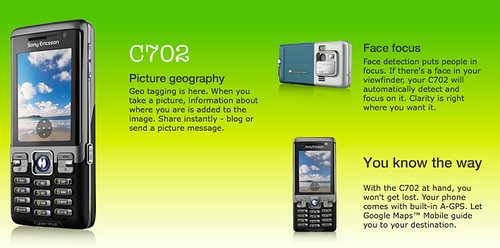
We had originally thought to use the Nokia N95 that we were so kindly given by Pop!Tech, this is a fairly costly device to have an accident happen to, so we have decided to ask the AfriGadget community help us purchase the Sony Ericsson C702. According to Frerieke,
“The phone that was most convincing to me due to it’s nice robust appearance – no sliding or flipping to open, it’s solid, easy to use, doesn’t look too fancy and it is splash and dust resistant (useful in the sandy township).”
Your part
We could use your help in a number of areas. First and foremost, just help spread the word about the project. If this pilot project turns out well, we’ll be doing this in many other untapped parts of the continent, and we’ll need even greater support.
Second, donate using the Chipin widget above, or to main@afrigadget.com
Lastly, thank you for being part of this community, for helping it get traction and grow all over the world.
[Update: After talking with support at ChipIn, they told me it is no longer supported, unless you create it through their new service SproutBuilder. I have done this, and a new widget is available above.]
We use cookies on our website to give you the most relevant experience by remembering your preferences and repeat visits. By clicking “Accept”, you consent to the use of ALL the cookies.
This website uses cookies to improve your experience while you navigate through the website. Out of these, the cookies that are categorized as necessary are stored on your browser as they are essential for the working of basic functionalities of the website. We also use third-party cookies that help us analyze and understand how you use this website. These cookies will be stored in your browser only with your consent. You also have the option to opt-out of these cookies. But opting out of some of these cookies may affect your browsing experience.
Necessary cookies are absolutely essential for the website to function properly. This category only includes cookies that ensures basic functionalities and security features of the website. These cookies do not store any personal information.
Any cookies that may not be particularly necessary for the website to function and is used specifically to collect user personal data via analytics, ads, other embedded contents are termed as non-necessary cookies. It is mandatory to procure user consent prior to running these cookies on your website.